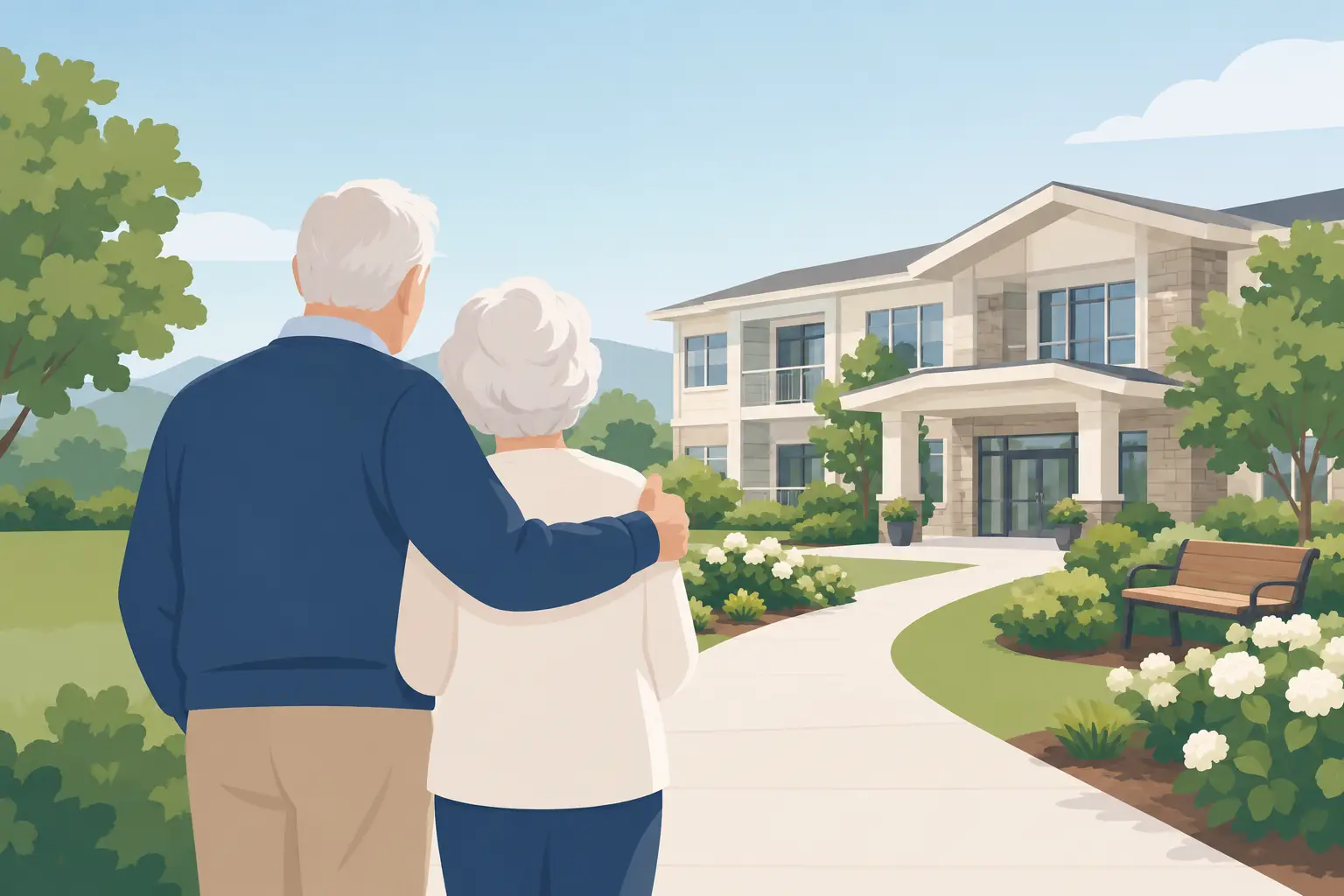
A move is rarely just a move for an older couple. It can mean leaving a longtime home, changing familiar routines, and facing the possibility that one partner needs more help than the other. The best senior housing for couples protects what matters most: the relationship, each person’s dignity, and the ability to receive appropriate care without creating an unnecessary separation.
For many families, the question is not simply, “Where can Mom and Dad live?” It is, “Can they stay together safely?” The answer depends on their current needs, how those needs may change, and whether a community can support both partners as individuals.
What Makes Senior Housing Work for a Couple?
The right setting allows a couple to continue sharing a life, not merely an address. That may mean eating meals together, welcoming family in a comfortable space, maintaining favorite activities, and having privacy at the end of the day. It also means having a realistic plan for care.
One spouse may be fully independent while the other needs help with bathing, dressing, mobility, medication reminders, or regular supervision. In some situations, one partner is living with memory loss. A strong housing plan recognizes that these differences can exist within the same marriage and should not force either person into a setting that does not fit.
The best communities make room for both shared routines and individual support. They help couples preserve companionship while ensuring the partner with greater needs is not relying solely on a spouse who may already be tired, stressed, or managing health concerns of their own.
Best Senior Housing for Couples: Start With Care Needs
Before comparing communities, begin with an honest assessment of daily life. Families often focus on a recent fall, a hospital stay, or a diagnosis. Those events matter, but the fuller picture is more useful. Consider what happens from morning through bedtime, including the tasks that may be difficult to see during a short visit.
Ask whether either partner needs hands-on help with personal care, walking, transferring, meals, continence, medications, or transportation. Think about cognitive changes as well. Is either spouse getting confused, wandering, missing appointments, repeating questions, or struggling to respond safely in an emergency?
It is equally important to assess the healthier spouse. A husband or wife may insist they can manage alone because they want to keep a promise or avoid change. Yet caregiving can gradually turn a partnership into a round-the-clock responsibility. When that happens, the caregiver’s wellbeing deserves as much attention as the care recipient’s needs.
A housing choice can be a source of relief when it restores a spouse’s role as a companion rather than making them the only person responsible for every task.
Understand Which Living Options May Fit
Senior housing is not one category. The setting that works best depends on the balance between independence, available support, supervision, and the couple’s ability to remain safely together.
Independent living
Independent living can be a good fit when both partners manage personal care and daily routines without regular hands-on assistance. It offers a maintenance-free lifestyle, social opportunities, and the convenience of living among peers. For couples who are still active but want fewer household responsibilities, it can be a meaningful next chapter.
However, independent living is not designed to provide ongoing personal care. If one spouse is already struggling with activities of daily living, a community with more support may be the safer choice.
Assisted living
Assisted living often works well when one or both spouses need help with daily tasks but do not require the level of clinical care provided in a nursing setting. Couples may share an apartment while one partner receives more assistance. This arrangement can preserve time together while giving the family confidence that help is available.
The key question is whether the community can meet each partner’s needs now and respond if those needs increase. Assistance levels, staffing approaches, and available services vary greatly from one community to another.
Memory care
When memory loss creates safety concerns, memory care may be appropriate for one spouse. This can be an emotionally difficult possibility, especially when a couple has spent decades together. Some communities offer memory care within the same campus as assisted or independent living, which may allow the other spouse to visit frequently and remain closely involved.
Keeping partners on the same campus is not the same as keeping them in the same apartment, but it can offer a compassionate middle ground when different levels of supervision are needed.
Supportive living (Medicaid) or other specialized settings
Some couples need a setting with a particular service model, cultural fit, accessibility feature, or level of oversight. The right answer may not be the community closest to home or the one a neighbor recommends. It may be a setting that better matches the couple’s care needs, communication style, finances and daily preferences.
Look Beyond the Apartment
A bright dining room and an attractive model apartment can make a strong first impression. They should not be the deciding factors. The daily experience is shaped by how a community responds when a resident needs help, feels anxious, misses a spouse, or has a change in condition.
During a visit, notice whether staff members address residents warmly and respectfully. Watch how they respond when someone asks a question or needs assistance. Consider whether the environment feels calm, organized, and genuinely lived in rather than staged for a tour.
For couples, ask specific questions about shared life. Can they dine together every day? Can one spouse participate in activities with the other? What happens if one partner needs more support after move-in? How does the community involve the other spouse and adult children in care discussions?
These conversations reveal whether a community sees a couple as two people with a shared history or simply two separate residents with separate care plans.
Plan for Change Without Assuming the Worst
Choosing senior housing is not about predicting every future health event. It is about selecting a setting that gives a couple options when life changes. A community may be appropriate today but have limitations if mobility declines or memory loss progresses. Knowing those limitations early helps families make decisions with fewer surprises later.
This is also why it helps to avoid making a rushed decision based only on the most urgent issue. A recent rehabilitation stay or a caregiver crisis may create pressure, but the long-term goal should remain clear: find a place where both people can live with as much safety, connection, and comfort as possible.
Sometimes the best choice is for a couple to share a residence with different levels of support. Sometimes one spouse needs memory care while the other remains nearby in assisted or independent living. And sometimes a couple is not ready to move at all, but needs a clearer plan for the future. There is no single right path, only the path that respects their specific circumstances.
Give Both Partners a Voice
Adult children often carry the burden of researching options, scheduling tours, and responding to a crisis. Their perspective matters, especially when they have seen risks their parents may minimize. Still, whenever possible, both spouses should be included in the conversation.
Ask what they fear losing, what they hope to keep, and what would make a new community feel like home. One spouse may care most about staying near friends, while the other may be focused on having a private place to read, pray, garden, or host grandchildren. These details are not minor. They are the building blocks of a life that still feels familiar and worthwhile.
When families in North Cook, Lake, or McHenry County need help sorting through these choices, a local advisor can provide a more focused starting point. Assisted Living Locators Chicagoland North helps families evaluate care needs and compare pre-assessed options so they do not have to navigate a complex search alone.
The right home for a couple is one that makes room for the life they have built together while providing the support that helps them keep living it.
Leave a Reply